Monday, November 28, 2022

Meet The Voters Who Fueled New York’s Seismic Tilt Toward Republicans [nyt]

https://www.nytimes.com/2022/11/27/nyregion/republicans-election-ny-suburbs.html

Meet the Voters Who Fueled New York’s Seismic Tilt Toward the G.O.P.

Republicans used doomsday-style ads to capitalize on suburban voters’ fear of crime in New York, helping to flip enough seats to capture the House.

GREAT NECK PLAZA, N.Y. — Lynn Frankel still has bouts of nostalgia for her old life, the one before the coronavirus pandemic brought New York City to a standstill and fears about crime began to bubble across this well-to-do suburb. There were dinners in the city with friends, Broadway shows, outings with her children — all an easy train ride away.

But these days if she can help it, Ms. Frankel, 58, does not set foot in the city. She’s seen too many headlines about “a lot of crazy stuff”: flagrant shoplifting, seemingly random acts of violence and hate crimes, which triggered concern about the safety of her daughters, who are Asian American.

Something else has changed, too. Ms. Frankel, a political independent who reviled Donald J. Trump, gladly voted Republican in this month’s midterm elections to endorse the party’s tough-on-crime platform, and punish the “seeming indifference” she ascribes to Democrats like Gov. Kathy Hochul.

“If you don’t feel safe, than it doesn’t matter what all the other issues are,” she said the other day in Great Neck Plaza’s tidy commercial area.

New York and its suburbs may remain among the safest large communities in the country. Yet amid a torrent of doomsday-style advertising and constant media headlines about rising crime and deteriorating public safety, suburban swing voters like Ms. Frankel helped drive a Republican rout that played a decisive role in tipping control of the House.

The attempt to capitalize on upticks in crime may have fallen short for Republicans elsewhere across the nation. But from Long Island to the Lower Hudson Valley, Republicans running predominantly on crime swept five of six suburban congressional seats, including three that President Biden won handily that encompass some of the nation’s most affluent, well-educated commuter towns. 

The numbers were stark. New York’s major suburban counties around the city — Nassau, Suffolk, Westchester and Rockland — all shifted between 14 and 20 points to the right, thanks to a surge in Republican turnout and crucial crossover votes from independents and Democrats. Even parts of the city followed the trend, though it remained overwhelmingly blue.

Take the Third Congressional District, a predominately white and Asian American seat connecting northeast Queens with the North Shore of Long Island that flipped to a Republican, George Santos. Turnout data suggests that Republican enthusiasm almost completely erased Democrats’ large voter registration advantage and flipped some voters, helping Lee Zeldin, the Republican nominee for governor, turn a long-shot bid into the state’s closest race for governor in 30 years.

Other factors accounted for Democrats’ suburban struggles here. Threats to abortion access drove some liberal voters to the polls, but many reliably Democratic Black, Latino and white voters stayed home. Swing voters blamed the party for painful increases in gas and grocery bills. Orthodox Jews furious over local education issues voted for Republicans at unusually high rates. Tactical decisions by Ms. Hochul appear to have hurt her party, too.

But in interviews with strategists from both parties, candidates, and more than three dozen voters across Long Island and Westchester County, it appeared that New York was uniquely primed over the last two years for a suburban revolt over crime and quality of life.

“Elections move dramatically when they become about a singular topic, and the election in New York was not about extremism on the left or right, about abortion or about Kathy Hochul,” said Isaac Goldberg, a Democratic political strategist on the losing side of several marquee races. “The election in New York was about crime.”

Long Island and Rockland County in particular have large populations of active and retired law enforcement, and a history of sensitivity to crime and costs. Growing Asian American and Orthodox Jewish populations were especially motivated this year by a string of high-profile hate crimes.

Then there is the coronavirus pandemic. Arguably no metropolitan area was hit harder than New York, where the economy and old patterns of life have also been slower to return. Remote work remains popular here, leaving Midtown office towers, commuter trains and subways below capacity — and many suburbanites increasingly reliant on media accounts saturated with images and videos of brutal acts of violence to shape their perceptions.

Commuters recently boarding trains into Manhattan from Nassau and Westchester said they were uneasy navigating Pennsylvania Station, some of which has been under construction; unnerved by the apparent proliferation of homeless encampments and open drug usage in Midtown; and now looked over their shoulder on the subway for people who appear to be mentally disturbed.

Several, including Ms. Frankel, said they frequently read The New York Post, which made Mr. Zeldin’s candidacy for governor and the repeal of the state’s 2019 bail law a crusade for more than a year, splashing violent crimes across its front page, however rare they may still be. Many asked not to be identified by their full names out of fear of backlash from friends, colleagues or even strangers who could identify them online.

“I wouldn’t go into the city even if they paid me,” a retired dental hygienist said as she mailed a letter in Oyster Bay. A 41-year-old lawyer from Rockville Centre said she sometimes wondered if she would make it home at night alive. A financial adviser from North Salem in Westchester County said it felt like the worst days of the 1980s and 1990s had returned, despite the fact that crime rates remain a fraction of what they were then.

“I have kids who live in Manhattan, and I am every day scared,” Lisa Greco, an empty nester who voted all Republican, said as she waited at a nail salon in Pleasantville, in Westchester.

“I don’t want them taking the subways but of course they do,” she continued. “I actually track them because I have to know every day that they’re back home. Like, I don’t want to keep texting them like, ‘Are you at work? Are you here?’”

Republicans, led by Mr. Zeldin, a Long Islander himself, relentlessly fanned those fears, blaming Democrats for the small rises in crime while accusing them of coddling criminals. A deluge of conservative advertising only amplified the approach, which blamed the new bail law and a Democratic Party that has complete control over both New York City and Albany.

Crime statistics tell a more complicated story. Incidents of major crimes are higher in New York City and Nassau County than before the pandemic, though they remain well below levels seen in recent decades. In Westchester, Suffolk and Rockland counties, major crime has been flatter, though in the first six months of this year, property and violent crimes were up compared with the same period in 2021.

Ms. Hochul had taken actions as governor to help combat crime and address the mental health crisis among the city’s homeless. And in the race’s final weeks, she pivoted to stress that she would do more. But voters and Democratic officials alike agreed the more nuanced approach was too little, too late.

“She’s not wrong, but it came across to a lot of the people I spoke to on Long Island as dismissive and tone deaf,” said Laura Curran, the former Democratic Nassau County executive who was swept out of office last fall by similar currents. “I don’t think it can be overstated how visceral people on Long Island feel about it.”

Ms. Hochul and other Democratic candidates spent more of the campaign focused on economic issues and protecting abortion rights. But unlike other states, some voters in New York said they were satisfied that abortion was already safely protected under state law.

“The mayor of New York City got elected last year running on this issue. Nothing got better; it got worse,” said Mike Lawler, a Republican who unseated Representative Sean Patrick Maloney in a district that Mr. Biden won by 10 points in Westchester and Rockland Counties. “So I don’t know why any of them are so surprised that this was top of mind to voters.”

Many New York City residents are baffled by what they view as the irrational fear of those in communities that are objectively far safer. But so are some suburbanites.

Back on the South Shore of Long Island, a woman waiting for the Long Island Railroad one morning last week said that since relocating from Brooklyn earlier this year, she had noticed a “hypersensitivity to strangeness” and “hysteria” around crime. It included fliers claiming only Republicans could keep the area safe and a drumbeat of messages in a neighborhood watch group about suspicious-looking strangers wandering through well-appointed streets.

“There’s a lot of community fear around this town and Nassau becoming more unsafe or changing,” said the woman, a Black lawyer in her mid-40s who only agreed to be identified by her initials K.V. “Maybe it has to do with a wave of people moving from urban communities since the pandemic.”

Commuting into the city two to three times a week for work from Rockville Centre, she said she felt no less safe than before, recalling stories of people getting pushed onto subway tracks when she was a child. She voted for Democrats to ensure the protection of abortion access.

Many New York City residents are baffled by what they view as the irrational fear of those in communities that are objectively far safer. But so are some suburbanites.

Back on the South Shore of Long Island, a woman waiting for the Long Island Railroad one morning last week said that since relocating from Brooklyn earlier this year, she had noticed a “hypersensitivity to strangeness” and “hysteria” around crime. It included fliers claiming only Republicans could keep the area safe and a drumbeat of messages in a neighborhood watch group about suspicious-looking strangers wandering through well-appointed streets.

“There’s a lot of community fear around this town and Nassau becoming more unsafe or changing,” said the woman, a Black lawyer in her mid-40s who only agreed to be identified by her initials K.V. “Maybe it has to do with a wave of people moving from urban communities since the pandemic.”

Commuting into the city two to three times a week for work from Rockville Centre, she said she felt no less safe than before, recalling stories of people getting pushed onto subway tracks when she was a child. She voted for Democrats to ensure the protection of abortion access.

Other voters who supported Democrats said they did have concerns about increases in crime, but could not justify backing any Republican associated with Mr. Trump and opposed to abortion rights.

“Abortion was definitely the biggest reason I voted Democrat,” said Susie Park, 41, who recently moved to Nassau County from Manhattan. “I don’t feel like a party should ever tell you what you should or should not do.”

At the ballot box, though, they were clearly outnumbered on Long Island this year by voters like Gregory Gatti, a 61-year-old insurance broker.

A political independent, he said he and most of his friends had voted for Republicans “because they want something done” about crime, inflation and illegal immigration.

As he read a fresh New York Post — its front-page headline, “Children of War,” once again devoted to New York City crime — Mr. Gatti said changes to the state’s bail law were “definitely” driving increases in crime, and he was now worried about possible upticks in the suburbs. But he had noted other reasons for concern, as well, as he commutes a couple of days each week through Penn Station to Lower Manhattan.

“I have noticed more homeless encampments. We never used to have those,” he said. “You have encampments, then you have drugs, you have crime.”

Timmy Facciola contributed reporting from Pleasantville, N.Y.

Nicholas Fandos is a reporter on the Metro desk covering New York State politics, with a focus on money, lobbying and political influence. He was previously a congressional correspondent in Washington. @npfandos

A version of this article appears in print on Nov. 27, 2022, Section A, Page 20 of the New York edition with the headline: Meet the Voters Who Fueled New York’s Seismic Tilt Toward the G.O.P.. Order Reprints | Today’s Paper | Subscribe

Elon Musk's suspension reversals | The tables below show notable Twitter suspension reversals for each day since Elon Musk took over as owner and CEO.

https://gist.github.com/travisbrown/c966666ad583f760a568e805f36274d4


All dates indicate when the suspension or reversal was detected, and the actual suspension or reversal may have been earlier. For most English-language accounts with large followings, this lag will generally not be longer than a few hours, but for accounts that have a small number of followers or that are outside the networks we are tracking, the difference can be larger, and in some cases an account on the list may have had its suspension reversed before 27 October 2022. These dates will get more precise as we refine the report.

Note that only reversals of permanent suspensions are shown, not instances of accounts being unlocked after being restricted for rule violation.

In some cases we do not have suspension detection dates (these are accounts that are known to have been suspended before February 2022). 

How the report works

This report is built on the same data collection system as this project, which tracks Twitter suspensions and screen name changes. The system monitors follower and friend lists for a set of seed accounts, and when an account either falls off of or appears on one of those lists, it is evaluated as a potential suspension or suspension reversal.

If an account appears on this report, that means that it had first been identified as suspended (not self-deactivated, and not locked by Twitter), and then later identified as unsuspended. The specific dates provided here for suspensions and unsuspensions are inherently inexact, since Twitter doesn't provide this information to third-party observers.

This report additionally scrapes recent tweets for accounts that are identified as suspension reversals. In some cases this lets us find a more precise time of reinstatement, but it's slow (because of API rate limits), and is still running for some of these accounts.

Table of contents

26 November 2022

Total suspension reversals observed: 238

Sunday, November 27, 2022

I bury things night and day, move through fiction and nonfiction to feel safe. You have no idea how terrifyingly boring time is.

While this beggared brain
Hatches no fortune,
But from leaf, from grass,
Thieves what it has.

(Sylvia Plath)

SIGH....Odell Beckham Jr. was kicked off a plane in Miami on Sunday. Flight crew said the NFL WR was in and out of consciousness and wouldn’t put on his seat belt, I’m told. The Los Angeles bound flight was delayed after Beckham refused to leave making everybody get off.

https://twitter.com/AndySlater/status/1596953020209958912

Michael Eric Dysin = https://www.nytimes.com/2022/11/20/opinion/kyrie-irving-kanye-west-antisemitism.html

https://www.nytimes.com/2022/11/20/opinion/kyrie-irving-kanye-west-antisemitism.html

Blacks and Jews, Again

Mr. Dyson (@MichaelEDyson) is a professor at Vanderbilt University and the author of “Entertaining Race: Performing Blackness in America.”

“What effective measures will the collective Negro community take against the vicious antisemitism?” Rabbi Everett Gendler shared this question with Dr. Martin Luther King Jr. at a meeting of the Rabbinical Assembly in 1968, 10 days before King was murdered.

Nearly 55 years later, the actions of two iconic Black figures demand that we ask a version of this question again. Ye, the hip-hop artist and fashion designer formerly known as Kanye West, has unleashed a rash of antisemitic tirades, and the Brooklyn Nets basketball superstar Kyrie Irving posted on social media a link to a documentary laden with antisemitic views.

The actions of Ye and Irving bring spent tropes of Jewish control to the surface. Their provocations also compel us to grapple with sometimes conflicting Jewish and Black views of race and privilege and how the suffering of the communities shapes their identities and fuels their fight against bigotry. It is painful and a bit embarrassing to admit that African Americans and Jews have, for one reason or another, competed, quarreled and jostled with each other to gain attention and empathy for our struggles and the injustices we confront.

None of that can blunt an abiding truth: We are, after all, old friends and lovers, sometimes rivals, with all the affection and bitterness such a relationship evokes. Black antisemitism is real; so is Jewish racism, from the horrendous bigotry of white Jews against Black Jews to the profoundly anti-Black statements of David Horowitz, who called Barack Obama “an evil man” and “an anti-American radical.”

But here we are, together, in the same boat, as fierce waves of hate threaten to sink our vessels in the ocean of American opportunity. To shift metaphors: We should remember the ways that our communities have historically passed the baton to each other in the long relay for justice. Until we see antisemitism as a toxic species of the white supremacy that threatens Black security and democracy’s future, none of us are truly safe.

Ye’s vitriol spilled onto social media when he posted a screenshot of texts exchanged with the rap mogul Sean “Diddy” Combs, accusing Diddy of being controlled by Jews. Ye threatened to use Combs “as an example to show the Jewish people that told you to call me that no one can threaten or influence me.” Ye then also posted that when he awakened, he was “going death con 3 On JEWISH PEOPLE.”

Ye’s statements may seem to have come out of nowhere, but they draw from a deeper vein of private belief and barely suppressed sentiment. Ye’s fame and enormous platform connect his newly surfaced prejudice to nameless figures who bow daily at the altar of hatred of the other.

Other antisemites see in Ye’s expression a cynical validation of their hateful conspiracies. A few days after one of Ye’s inglorious outbursts, a hate group hung a banner over a Los Angeles overpass that said, “Kanye is right about the Jews.” Ye’s despicable comments offered well-established bigots fresh currency as they poured old racism into his new rhetorical wineskins.

Although Irving didn’t directly utter antisemitic sentiments, he endorsed a film that did. The player shared without comment a link to “Hebrews to Negroes: Wake Up Black America,” a film rife with antisemitic conspiracy theories, among them that many famous Jews were Satan worshipers and that the Holocaust was a hoax.

When he was confronted with the film’s ugly untruths, Irving claimed he was no bigot and that he sought “to learn from all walks of life and religions.” After he was challenged by a reporter, he said he wasn’t promoting the film, but he concluded, “I can post whatever I want.”

Irving’s stubborn refusal to apologize led to an indefinite suspension by the Brooklyn Nets, a belated apology and a meeting with Adam Silver, the commissioner of the N.B.A. After their conversation, Silver said that in over a decade of association with Irving, “I’ve never heard an antisemitic word from him or, frankly, hate directed at any group.” But Silver added, underscoring an essential point, “Whether or not he is antisemitic is not relevant to the damage caused by the posting of hateful content.” Part of the damage, which is not discussed enough, is that Ye and Irving have encouraged those who harbor deep animosity toward Jews, glimpsed as Ye cheered Irving on in an Instagram post, “There’s some real ones still here.”

The film Irving posted about referred in part to a Black religious body called the Black Hebrew Israelites, a movement that traces back to the late 1800s and preaches that Black folk are descended from the ancient Israelites. When Irving in a news conference declared, “I cannot be antisemitic if I know where I come from,” suggesting that he agrees with Black people who view themselves as authentic Jews, he ignored how, just as Black people can be anti-Black, Jews can be antisemitic.

King said in response to Rabbi Gendler that Black antisemitism was largely a Northern ghetto experience, driven by the harsh contrast between Jews as the “most consistent and trusted ally in the struggle for justice” and Jews as “the owner of the store around the corner where he pays more for what he gets” and landlords who charge “a color tax.” Still, King condemned “the irrational statements” that grow from such encounters and concluded that “the only answer to this is for all people to condemn injustice wherever it exists.”

No one who has heard the Black Hebrew Israelites on big-city street corners with megaphones in hand can deny the racial trauma they cantankerously amplify or ignore the Black suffering, from slavery to the present day, from which they desperately seek relief. Nor can we overlook the hateful sentiments and relentless stream of antisemitic rhetoric that fall obscenely from their lips.

Sitting right alongside varieties of Black antisemitism is a redemptive variety of philosemitism that can only be called Jew envy. I have heard such envy in barbershops, pool halls, churches and clubs across the nation. Black folk often praise Jews — for their unity and, above all, for their ability as a people who account for less than 2.5 percent of the U.S. population to successfully make their way in the world with perceived entrepreneurial success and cerebral accomplishments that many Black folk admire and covet.

Jewish unity is likely more myth than fact; Jews, after all, have competing factions, just as African Americans do. Some are conservative, some liberal, some Orthodox, some traditional, some postmodern. Whatever wealth, privilege and influence Jews have built, there is also a history of persecution and the generational trauma carried by the families of Holocaust victims and survivors. And relentless antisemitic attacks have had an impact on all Jews, up to the present day. All Jews, regardless of wealth, are threatened by the vicious antisemitism that has been spread in dangerous networks of white supremacy.

The relation of African Americans to Jews cannot be divorced from the pervasive glow and allure and privilege of whiteness. The fact that most Jews are white-eligible and African Americans are white-excluded creates tensions between African Americans and many Jews that have less to do with the cultural conflicts between the groups than with the meaning of Blackness and whiteness in America.

Many Black folks claimed that Ye went unscathed when he made anti-Black statements — stating that slavery was a choice, sporting a “White lives matter” T-shirt — but the moment he let loose a flurry of antisemitic screeds, he got the hook and paid a huge economic price.

Those who make such clumsy comparisons are drawing faulty parallels. They are missing a rule of thumb that applies to Latinos, Asians, Indigenous people, Jews and most other groups: If you are inside the community, you can take far more liberties than outsiders can. Black folk can say the N-word; folk who are not Black cannot. Black folk can say things about each other, our culture, our habits and dispositions, our values and visions and our virtues and vices, but those outside our communities dare not say them.

Saying harsh things about another culture is a dicey undertaking. In fact, white folk and other non-Black people who might have weighed in on Ye’s noxious anti-Blackness may have been discouraged from doing so by the very Black folk who found Ye’s views offensive. There is a dictum we all operate under: I can talk bad about my mother or brother, but you had better not. By that standard, Ye’s anti-Blackness should have been vigorously challenged by Black folk. To be sure, few Black folk are in a position to hold him to account, other than through critical public commentary or the highly problematic channels of cancel culture.

When Ye flicked verbal jabs at Jews, though, he was using his considerable visibility to pummel another population that has also endured considerable oppression. He was guilty of the very influence peddling and abuse of power he claimed he had suffered at the hands of Jews.

Ye’s Blackness could not rescue him, especially when he made the specious claim that, after all, he was punching up at the all-powerful and controlling Jews who were attempting to make his life hell. Ye met his match on the battlefield of symbolic politics and racial dispute: The people he attacked had just as much cultural cachet as Black folk do, because they, too, survived trouble, terror and trauma. His Blackness offered no shield from the undoing he faced for recklessly assaulting another group of people whose suffering had inspired the sorrow songs of his own people more than a century earlier.

Ye, Irving and the rest of us would do well to remember that African Americans and Jews are passengers on the same ship facing the ferocious headwinds of bigotry and hatred. The author and psychoanalyst Frantz Fanon said he learned to be “responsible in my body and soul for the fate reserved for my brother,” understanding that “the antisemite is inevitably a Negrophobe.” That is a lesson we should all learn.


Michael Eric Dyson (@MichaelEDyson) is a professor at Vanderbilt University and the author of “Entertaining Race: Performing Blackness in America.”

The Times is committed to publishing a diversity of letters to the editor. We’d like to hear what you think about this or any of our articles. Here are some tips. And here’s our email: letters@nytimes.com.

Follow the New York Times Opinion section on Facebook, Twitter (@NYTopinion) and Instagram.

A version of this article appears in print on Nov. 27, 2022, Section SR, Page 4 of the New York edition with the headline: Blacks and Jews, Again. Order Reprints | Today’s Paper | Subscribe


Iran denies they are suppliers of weapons to Russia, so I guess those drone advisers never existed: Iranian drone advisers who were helping Russia bombard Ukraine were killed in Crimea

 https://www.businessinsider.com/iranian-advising-russia-drones-were-killed-crimea-ukraine-2022-11

Naftali Bennett - A Good-Will Government Was Possible In Israel [nyt]

https://www.nytimes.com/2022/11/27/opinion/a-good-will-government-was-possible-in-israel.html


Mr. Bennett was the 13th prime minister of Israel.

A year and a half ago, I made a difficult decision: to break from my political base and form a government with people I couldn’t have imagined working with in my wildest dreams.

Israel was at one of its lowest moments, polarized and paralyzed: four rounds of elections in two years, massive riots in Arab and mixed towns, and killings of Israeli Jews and Israeli Arabs, plus hundreds injured. The Palestinian terrorist organization Hamas had just shot rockets into Jerusalem after the annual Flag Parade in the Old City.

We had near-record unemployment and an unprecedented deficit. We hadn’t passed a budget for three years. Benjamin Netanyahu had failed to form a government, and we were just days away from another round of elections and full-blown chaos.

I vividly recall the moment, a Sabbath morning, when I made the decision. I asked my four children to join my wife, Gilat, and me in the kitchen. I told my family, “Your abba is about to attempt something, and I don’t even know if I’ll succeed. A lot of people — including friends — will say a lot of bad stuff about your abba. So I want you to know that I’m doing it for Israel’s sake.”

An unrelenting propaganda campaign run by the opposition over social and traditional media tried to break me and my party, Yamina. The pressure worked. Just days before the critical vote, a member of my party bolted. As a result, we were down to the bare minimum necessary to form a new government.

On June 13, 2021, the Knesset voted to establish the new government with a majority of 60 votes, with 59 opposing votes and one abstention. At that moment, I became the prime minister of the most diverse government in Israel’s history. Right and left, religious and secular, Jews and Arabs, all working together.

We passed a reform-packed budget, brought hundreds of thousands of Israelis back to work and reduced the ballooning deficit to nearly zero. We delivered the quietest year in decades to rocket-battered southern communities close to the Gaza Strip. We blocked a dangerous nuclear agreement with Iran that would have, according to our calculations, poured over $200 billion into the terrorist regime’s coffers while barely restraining its nuclear enrichment abilities. We achieved this while maintaining strong bipartisan support in the United States. And we became the first nation to distribute the third Covid booster shot, paving the way for the rest of the world.

How did we do it?

I established the 70/70 rule.

About 70 percent of Israelis agree on 70 percent of the issues. We all agree that we need better trains and roads, better education, more security and a lower cost of living. However, we disagree on the Israeli-Palestinian conflict, religion and state and the desired nature of our legal system.

So my government focused on getting the 70 percent done, as opposed to endlessly wrangling over the issues we didn’t agree on. We all agreed that this government will neither insist on Israeli sovereignty for territories nor hand them over to Palestinians. Similarly, we decided we would not legislate on any disputed religious or legal matters.

When you neutralize the most politically sensitive issues, ministers from left and right saw each other as decent people working for the good of Israel and not as the demons we had been calling each other.

We called ourselves a good-will government. We proved to ourselves and to those outside our coalition that people with radically different political opinions can work incredibly well together. The world is more polarized than ever. The model we presented was one of cooperation and unity. Of transcending your tribe for the good of your nation.

Take Mansour Abbas, the leader of the Arab Raam party. The first time I met him was during the weeks before we formed the government.

Mr. Netanyahu had been secretly meeting Mr. Abbas in his attempts to form a coalition. Before I met Mr. Abbas, I had a negative opinion of him. I thought he supported terrorism. I heard from many that this wasn’t true. They told me he was genuinely trying to create a pragmatic model for Israeli Arabs.

I called him and invited him to a meeting.

“Which secret apartment should we meet at?” Mr. Abbas asked me. He was used to huddling with people in secret, as they didn’t want their discussions to be discovered.

“We’re going to meet openly at my Knesset office,” I replied. “You are not second-class. I am not ashamed to meet you.”

I discovered a brave leader just about my age who turned out to be something of a mensch. We are both men of faith and quickly agreed that whatever theological disagreements may exist between Judaism and Islam, we will let God handle those. We will work together here and now to provide better education, better jobs and safer streets for Israelis and Arabs.

After a year of progress, my government collapsed amid nonstop pressure from public protests and on social networks. Arab parliamentarians who joined my coalition in order to improve the socioeconomic future of Israeli Arabs were called traitors in their hometowns, as were members of Yamina in their communities.

Organized groups set up tents just meters from the homes of these members of Knesset, relentlessly harassing their families for months, calling them terrorist lovers. One of my party members reported that her husband’s job was at risk and her children were being threatened at school.

At the same time, Israel incurred a series of Palestinian terrorist attacks in Tel Aviv and other major cities, taking the lives of about 20 people. The opposition claimed that this was a result of the government’s hands being tied by the Raam Arab party. This is false, given that we’ve seen terrorist attacks in the land for over 100 years and my government was actually tougher than usual on the terrorists.

As a consequence, the Raam Arab party suspended its membership in the government. An Arab member of the Knesset from the Meretz party temporarily quit as well. A few members of my party, too, stopped supporting the coalition.

My government did a poor job fending off the enormous amount of misinformation that was being spread across Israel and blind sectarianism. This campaign succeeded and brought my government to its end.

A new government is now being formed in Israel, and I hope its leaders understand that the single biggest challenge for Israel is keeping all parts of Israeli society together.

The State of Israel is the third instance of a Jewish political entity in the Holy Land. During the time of the First and Second Temples, we managed to keep our nation together for only about 80 years, after which internal divisions tore us apart and we ultimately lost our independence. Israel is now in its 75th year. This is our third chance, and we’re determined that this time, we succeed.

Though my government operated for only a year, I believe we imprinted a unique image and model of how a highly polarized society can cooperate.

That beautiful image, once engraved in hearts and minds, cannot be easily erased.

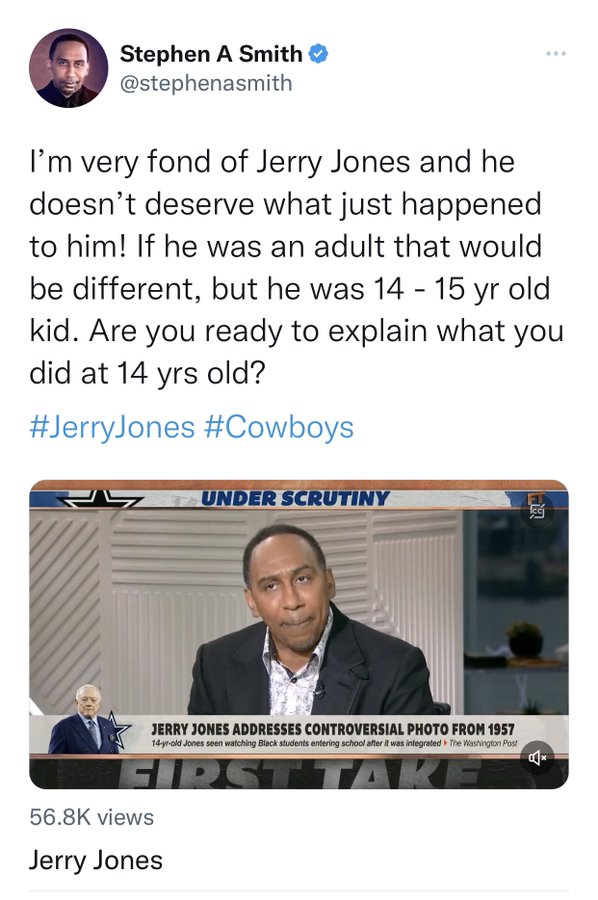
I’m also very fond of Jerry Jones...Stephen A. Smith....

 https://twitter.com/stephenasmith/status/1596225800432279553


 https://pbs.twimg.com/media/FibvJadWYAUafZf?format=jpg&name=900x900

Saturday, November 26, 2022

Empty Kherson art museum in despair after entire collection stolen by Russia

https://kyivindependent.com/national/empty-kherson-art-museum-in-despair-after-entire-collection-stolen-by-russia

Empty Kherson art museum in despair after entire collection stolen by Russia

by Francis FarrellNovember 26, 2022 5:25 pm
 

KHERSON — Housed in a grand imperial building with a view out onto the Dnipro River, the Kherson Fine Arts Museum once hosted one of the richest collections in all of Ukraine. 

As with the rest of Kherson, which had its electricity infrastructure destroyed by withdrawing Russian forces in early November, the halls of the museum are now cold and dark.

Far more tragically, the Kherson Fine Arts Museum has been emptied of all its works by Russian officials. Of the over 14,000 works in its collection, barely anything remains. Russia’s withdrawal from Kherson was a well-planned operation, a key component of which was the looting of anything deemed to be of financial or cultural value. The Russian campaign of theft was comprehensive and wide ranging, covering everything from hospital equipment and public monuments to an unfortunate raccoon living in Kherson Zoo. 

Stolen equipment and monuments can be replaced, but priceless artworks cannot. All that remains now of the once flourishing museum is the building itself, and inside it, the two last staff members who refused to collaborate with Russia. 

Speaking to the Kyiv Independent on Nov. 16 in her personal office at the museum, director Alina Dotsenko, 72, steered clear of her old work desk, shuffling closer to the window where the last dim light of the day was making its way in.

“I still can’t bring myself to sit where they sat,” she said, referring to her Russian-installed replacement, a local singer called Natalia Desiatova, who oversaw the looting of the museum’s collection.

Joy upon the liberation of Kherson comes with a bitter aftertaste for Dotsenko, who had initially fled to Ukrainian-controlled territory in early May, after she had refused to host a Victory Day event held by occupation authorities in the museum.

Dotsenko returned to Kherson in a Security Service convoy on Nov. 12, a day after Ukrainian troops entered the city, only to arrive at work for all her fears about the museum to be confirmed. 

“Are you trying to bring me to tears again?” she said when asked to recall the day. “I haven’t really lived these last few months, I have only worried and worried."

From intricate 17th century Orthodox icons to works by a multitude of Ukrainian, Russian, and other European masters including Ivan Aivazovsky, Vasily Polenov, Auguste von Bayer and Peter Lely, the museum’s collection was Dotsenko’s pride and joy.  

“We didn't expand our collection for the sake of money or status,” she said, “but because of what it meant to the city.”

The museum’s collection was already in storage when Russia’s full-scale invasion was launched on Feb. 24, as the building was undergoing major restoration works. Calls by Dotsenko to evacuate the collection fell upon deaf ears as Kherson fell to Russian forces in a matter of days. 

The collection of the Kherson Fine Arts Museum joins the Arkhip Kuindzhi Museum in Mariupol among others in the list of priceless cultural assets Ukraine has lost due to Russia’s invasion. These losses could have been prevented by well-prepared evacuation plans put into place when Russia’s invasion became an increasing likelihood.

The evacuations that never happened are the subject of an ugly blame game between the Ukrainian Ministry of Culture and local authorities, with both accusing the other of inaction in evacuating priceless museum collections before it was too late.

“Local authorities, managers, and mayors, and governors told me exactly this: ‘There is no need to sow panic for the local population, everything is fine with us,’” said Culture and Information Minister Oleksandr Tkachenko in an interview to Ukrainian Pravda. 

Pavlo Andriushchenko, advisor to the Mayor of Mariupol, responded to Tkachenko’s interview on Telegram, reflecting the blame on the ministry.“It would have been great to see at least one piece of paper signed by him, ordering the evacuation of the valuables of Mariupol, overruling the restrictions for the movement of valuables approved by the ministry,” Andriushenko wrote.

“All the collections of Mariupol were lost because of one thing only - because of the reluctance of the ministry to deal exclusively with this issue.”

For the Kherson collection, the damage has been done. A few days after the collection was removed in preparation for the Russian withdrawal, photos emerged on Facebook of dozens of works from the collection stacked up in storage in the Central Taurida Museum in occupied Simferopol, Crimea.

A few days after the collection was removed in preparation for the Russian withdrawal, photos emerged on Facebook of dozens of works from the collection stacked up in storage in the Central Taurida Museum in occupied Simferopol, Crimea.


Enemies inside

In almost any town or city occupied by Russia in Ukraine, locals are found who, motivated by money, pro-Russian sentiments, or bitterness towards colleagues, are willing to cooperate with the occupying authorities.In the case of the Kherson Fine Arts Museum, the presence of one or two collaborants was pivotal in the stealing of the museum’s collection and data.

In the early weeks of the occupation of Kherson, Dotsenko quickly grew concerned that some of the museum staff could soon betray the collection to Russia. In some cases, Dotsenko sent them on paid leave simply so that they wouldn’t be present on the museum grounds. 

“I had never trusted them,” she said. “I grew up a daughter of a border guard, so I had my eyes on them all the time.”One collection worker, Maryna Zhylina was even fired last year by Dotsenko, who was increasingly concerned by her openly pro-Russian position. “I had imagined she would leave to Russia, she had a daughter in Moscow,” Dotsenko said. “She was a good worker but pro-Russian from head to toe.”


With the core of the staff remaining loyal, it took several months before Russian occupation authorities got around to taking over the museum, unlike the neighboring Regional Museum, where director Tetiana Bratchenko immediately chose to collaborate.

“Just see how much we held out!” Dotsenko said with pride. “They were in the other museum by the beginning of March, but here, not until July!”

When that day came on July 19, Dotsenko had long left Kherson, and the museum was guarded by accounting and archive worker Hanna Skrypka, 56, a loyal confidant of Dotsenko’s. According to Skrypka, armed Russian men came to the museum’s doors and demanded the keys from her, “to open the space and prepare it for the arrival of the new director.” Requests by Skrypka to show some authorizing documents were denied. 

After half an hour of stalling the soldiers, the new “director” Desiatova, arrived. Desiatova was joined by former colleague Anna Koltsova, who had confirmed to the Russians that the collection had not been moved as claimed by Dotsenko, and who had secretly saved copies of the museum’s electronic records on her personal computer before the invasion.

“As I understand it, this individual was towards the end of her life and was simply hoping for a taller pedestal to stand on than what she was given by Ukraine,” said Skrypka. “Traitors, plain and simple.”

Swift and systematic

It was not until the end of October, when the Russian occupation of Kherson was understood to be doomed, that the removal of the museum’s entire collection began.

“They were certain that they were here forever,” Dotsenko said, “but as soon as our soldiers started to come closer, they started to steal everything.”

Starting on Oct. 31, trucks began to line up outside the museum, accompanied by a mix of Russian soldiers, representatives of the Russian Ministry of Culture and Federal Security Service (FSB) officers in civilian clothes. “Everything that was in a visible location attracted their eye right away,” said Skrypka. “Since the so-called ‘colleagues’ of ours who knew where the most valuable artworks were being held, these pieces were taken first according to their instructions.”

Early in the occupation, Dotsenko and Skrypka had tried to hide some of the most valuable works, but the presence of pro-Russian colleagues, Koltsova and Zhylina, rendered these efforts pointless.

“I was trying first to show them some of the Russian artists that weren't as valuable to us personally, in the hope that that would satisfy them,” said Skrypka. 

“But the two of them were always there over my shoulder, saying (to the FSB officers) 'well have a look at that shelf, why don't you pull out that one...'"

Two trucks were filled each day with artwork, frames often crudely stacked up against each other with zero care given to proper packaging and temperature controls. 

According to Skrypka, the Russians didn’t speak much to her, only justifying their theft on the grounds of “saving” it from the Ukrainian advance, the same message used by local proxy authorities.“This collection that has been here for many decades, and you are "saving" it?” pondered Skrypka. “From whom? From the nation who is coming to liberate its own city?”

By the time Skrypka left the museum on Nov. 4, the removal of over 10,000 works had been accounted for, with more trucks still arriving. “I didn't say goodbye to them,” said Skrypka of her former colleagues. “They had planned a big feast to celebrate the completion of the emptying of the museum, and how could I sit and eat with my enemies?”

Dreams of justice

Though shelling of the city has intensified in the two weeks since liberation, residents on the streets of Kherson are largely optimistic that the rest of Ukraine’s occupied territories will be successfully liberated. Territory can be won back, but it is hard to look with the same optimism at the chances of returning the priceless artworks of the Fine Arts Museum in Kherson. A museum without its collection and archive is a museum without an identity, and the road ahead is uncertain. 

While many of its works have been identified in the pictures from occupied Simferopol, it is not known whether the huge collection has been kept together in its entirety. Given the scale of the theft and lack of care shown to the works, it is not unlikely that some pieces disappeared into private hands on the way. 

The museum may be empty, but Skrypka is not short of work. Together with Dotsenko, she must now create a comprehensive digital account of all the looted pieces. “We need to record everything that was taken, complete with photos,” she said, “so that if anything happens to show up on a border or at an auction, it can be identified.”

Beyond that, Ukraine’s only hope to return the stolen art, which is officially property of the Ukrainian state, is through international efforts now led by the Ukrainian Ministry of Culture.“When the time eventually comes for peace negotiations, this must be one of the first terms put forward: the return of all artefacts from looted museums,” Skrypka said. “Of course, they won't agree with it, but we need to be loud about it anyway while other channels are pursued.”

For the foreseeable future though, the Kherson Fine Arts Museum as it once was has ceased to exist.

“I don't have any words to describe their relationship to history, to culture, to human life,” said Skrypka. 

“What can you teach children about culture, about respecting other cultures if you not only can't protect your own culture, but simply steal from others and call it your own?”

____________________

Note from the author:

Hi, I'm Francis Farrell, who wrote this piece from on the ground in liberated Kherson. The story of the Fine Arts Museum in Kherson is the convergence of two trends we have observed since the start of the full-scale invasion: the systematic looting of anything of value from occupied areas and the destructive, careless approach to cultural assets shown by Russian occupying forces. As winter arrives in Ukraine and the nation is plunged into darkness, we will continue to cover what is going on for the world. Please consider continuing to support our reporting.

Francis Farrell
Reporter

Francis Farrell is a reporter at the Kyiv Independent. He has worked as managing editor at the online media project Lossi 36, and as a freelance journalist and documentary photographer. He has previously worked in OSCE and Council of Europe field missions in Albania and Ukraine, and is an alumnus of Leiden University in The Hague and University College London.


Irene Cara - What A Feeling [Flashdance] | This song defined an era that is deeply embedded in my heart as much as my father's 1960's era

https://www.yahoo.com/entertainment/irene-cara-fame-star-won-132017341.html

https://www.youtube.com/watch?v=ILWSp0m9G2U |  

"Flashdance... What A Feeling"

First when there's nothing
But a slow glowing dream
That your fear seems to hide
Deep inside your mind

All alone, I have cried
Silent tears full of pride
In a world made of steel
Made of stone

Well, I hear the music
Close my eyes, feel the rhythm
Wrap around, take a hold of my heart

What a feeling
Being's believing
I can have it all
Now I'm dancing for my life

Take your passion
And make it happen
Pictures come alive
You can dance right through your life

Now I hear the music
Close my eyes, I am rhythm
In a flash, it takes hold of my heart

What a feeling, being's believing
I can have it all
Now I'm dancing for my life

Take your passion
And make it happen
Pictures come alive
Now I'm dancing through my life

What a feeling

What a feeling (I am music now)
Being's believing (I am rhythm now)
Pictures come alive
You can dance right through your life

What a feeling (I can really have it all)
What a feeling
(Pictures come alive when I call)
I can have it all (I can really have it all)

Have it all (pictures come alive when I call)
(Call, call ,call, call, what a feeling)
I can have it all (being's believing)
Being's believing (take your passion)
(Make it happen) Make it happen
(What a feeling) What a feeling

File:Irene Cara.jpg

Pimp Those Chips: Secretary Of Commerce Gina Raimondo [nyt]

https://www.nytimes.com/2022/11/26/business/economy/gina-raimondo-chips-biden.html

A Rising Star in the Biden Administration Faces a $100 Billion Test

Gina Raimondo, the commerce secretary, has made a career of tackling increasingly larger challenges. Could the next one be too big?

WEST LAFAYETTE, Ind. — Gina Raimondo, the commerce secretary, was meeting with students at Purdue University in September when she spotted a familiar face. Ms. Raimondo beamed as she greeted the chief executive of SkyWater Technology, a chip company that had announced plans to build a $1.8 billion manufacturing facility next to the Purdue campus.

“We’re super excited about the Indiana announcement,” she said. “Call me if you need anything.”

These days, Ms. Raimondo, a former Rhode Island governor, is the most important phone call in Washington that many chief executives can make. As the United States embarks on its biggest foray into industrial policy since World War II, Ms. Raimondo has the responsibility of doling out a stunning amount of money to states, research institutions and companies like SkyWater.

She is also at the epicenter of a growing Cold War with China as the Biden administration uses her agency’s expansive powers to try to make America’s semiconductor industry more competitive. At the same time, the administration is choking off Beijing’s access to advanced chips and other technology critical to China’s military and economic ambitions.

China has responded angrily, with its leader, Xi Jinping, criticizing what he called “politicizing and weaponizing economic and trade ties” during a meeting with President Biden this month, according to the official Chinese summary of his comments.

The Commerce Department, under Ms. Raimondo’s leadership, is now poised to begin distributing nearly $100 billion — roughly 10 times the department’s annual budget — to build up the U.S. chip industry and expand broadband access throughout the country.

How Ms. Raimondo handles that task will have big implications for the United States economy going forward. Many view the effort as the best — and only — bet for the United States to position itself in industries of the future, like artificial intelligence and supercomputing, and ensure that the country has a secure supply of the chips necessary for national security.


But the risks are similarly huge. Critics of the Biden administration’s plans have noted that the federal government may not be the best judge of which technologies to back. They have warned that if the administration gets it wrong, the United States may surrender its leadership in key technologies for good.

“The essence of industrial policy is you’re gambling,” said William Reinsch, a trade expert at the Center for Strategic and International Studies, a think tank. “She’s going to be in a tough spot because there probably will be failures or disappointments along the way,” he said.

The outcome could also have ramifications for Ms. Raimondo’s political ambitions. In less than two years in Washington, Ms. Raimondo, 51, has emerged as one of President Biden’s most trusted cabinet officials. Company executives describe her as a skillful and charismatic politician who is both engaged and accessible in an administration often known for its skepticism of big business.

Ms. Raimondo’s work has earned her praise from Republicans and Democrats, along with labor unions and corporations. Her supporters say she could ascend to another cabinet position, run for the Senate or perhaps mount a presidential bid.

But she is under close watch by Senator Elizabeth Warren of Massachusetts and some other left-wing Democrats, who have criticized her as being too solicitous of corporate interests. Some progressive groups have accused Ms. Raimondo of being under the influence of big tech firms and not thoroughly disclosing those ties.

“Secretary Raimondo’s job is to help grow an economy that works for everyone, not to be the chief lobbyist for the Chamber of Commerce,” Ms. Warren said in a statement to The New York Times. “I have real concerns about the department’s approach, whether it’s approving assault weapon sales, negotiating trade deals or supporting big tech companies.”

Those criticisms have been fanned by rumors in recent months that the White House is considering Ms. Raimondo to serve as the next Treasury secretary if Janet L. Yellen, the current occupant of that post, eventually steps down.

Caitlin Legacki, a spokeswoman for the Commerce Department, dismissed speculation about Ms. Raimondo’s next moves as “wheel spinning.”

“As has been previously reported, Janet Yellen is staying at Treasury and Gina Raimondo is staying at Commerce,” Ms. Legacki wrote in an email.

Ms. Raimondo says she is eager to lead the Commerce Department through its next chapter as it tries to build up America’s manufacturing sector. While the scale of the task is daunting, it so far has not fazed Ms. Raimondo. Colleagues and family members describe her as having little aversion to conflict and say she is drawn to messy policy problems by an impulse to fix them.

Ms. Raimondo grew up in Rhode Island in a close-knit Roman Catholic family, raised partly by a brother 13 years her senior who recalled wrestling with her and throwing her in the water at the beach.

She was “afraid of pretty much nothing,” said her brother, Dr. Thomas J. Raimondo, a pulmonologist in Warwick, R.I. “I think because we brought her up tough, but No. 2, she’ll enter a conflict figuring out, ‘How am I going to fix this?’”

In the sixth grade, she was also deeply influenced by watching her father lose his job at the Bulova watch factory as American manufacturers began sending jobs overseas. The job was a source of pride for her father and allowed him to provide for his family, and the loss sent him into a funk for years, Ms. Raimondo said in an interview. Her mother had shone in a job in human relations at U.S. Rubber, Ms. Raimondo said, but she was dismissed when she became pregnant, a common policy at the time.

As Ms. Raimondo grew up, other manufacturers like Timex and U.S. Rubber shut their doors, and she saw Rhode Island’s schools and infrastructure begin to fray. The significance of these closures would resonate when Ms. Raimondo studied economics as an undergraduate at Harvard, where her professors fed her a “steady diet” of how trickle-down Reaganomics had hollowed out the U.S. economy, she said.

It was also this decaying system — specifically, Rhode Island’s decision to slash public bus routes and library hours when budgets fell short — that ultimately drove Ms. Raimondo to leave a lucrative job in venture capital and run for state treasurer in 2010. There, she made changes to shore up the state’s pension system, clashing with unions and progressive Democrats in the process.

She was elected as the state’s first female governor in 2014. In that job, she introduced free community college and all-day kindergarten, repeatedly raised the minimum wage and cut business taxes. She also courted controversy by proposing a toll on commercial trucks to rebuild the state’s roads and bridges. In 2016, 18-wheel trucks circled Rhode Island’s State House for months, blasting their horns in protest and rattling the nerves of Ms. Raimondo’s staff.

Mr. Biden, then vice president, came to her defense. He traveled to Providence to applaud her efforts and inspect a local bridge that he said was being held up by “Lincoln Logs.”

“Let the horns blow,” Mr. Biden said. “Fix the bridges and the roads.”

Ms. Raimondo was also gaining political support elsewhere in the Democratic Party. She grew close with Mike Donilon, a top adviser to Mr. Biden, and his brother Thomas E. Donilon, who served as national security adviser to President Barack Obama. In 2020, she was a national co-chair of Michael R. Bloomberg’s presidential campaign and was floated as a potential running mate.

Mr. Biden and his team vetted Ms. Raimondo as a potential vice president. After Mr. Biden won, they considered her to lead the Department of Health and Human Services before settling on the Commerce Department, a sprawling agency that oversees trade, weather monitoring, the Census and technology regulation.

At Commerce, Ms. Raimondo has taken an active role in trade negotiations, at times overshadowing the Office of the United States Trade Representative, which traditionally crafts the country’s trade deals. She played an outsized role in some of the administration’s major legislative victories, including reaching out to executives to win their support for the infrastructure bill and leaning on her relationships with lawmakers and executives to get funding for the semiconductor industry put into law.

Ms. Raimondo has also presided over the most aggressive use of the Commerce Department’s regulatory powers in a generation. While the department is well known for its role in promoting business, it has an increasingly important role in regulating it by policing the kind of advanced technology that U.S. firms can share with China, Russia and other geopolitical rivals.

In February, her department moved swiftly with allies to clamp down on technology shipments to Russia following its invasion of Ukraine. And in October, the department issued sweeping restrictions on advanced semiconductor exports to China in an attempt to curtail the country’s access to critical technology that can be used in war.

But Ms. Raimondo has also received some criticism on that front. Republican lawmakers and others say she has not moved forcefully enough to stop U.S. companies from enriching themselves by selling sensitive technology to China. In particular, critics say that the Commerce Department has issued too many special licenses that offer companies exemptions to the restrictions on selling to China.

In an interview, Ms. Raimondo said that the claim was “just not true” and that exemptions were based on technical specifications, not political considerations.

The restrictions that the Biden administration issued on China’s semiconductor industry last month are “the boldest, most coherent strategic set of policies that the Commerce Department has ever rolled out with respect to export controls,” Ms. Raimondo said.

When it comes to overseeing industry, Ms. Raimondo has said she sees reasonable regulation of business as a necessity, saying corporations left to their own devices will “get greedy.” And she has been outspoken about improving living conditions for America’s poor, often decrying an economic system where many women and people of color can work 60-hour weeks but still live in poverty.

But unlike some progressive Democrats, Ms. Raimondo clearly does not see an issue with being labeled “pro-business.”

“I come from a place in my politics that, fundamentally, Americans are pro-job, pro-business, pro-wealth,” she said. “Americans want to make money and feel like they can make money.”

She added: “American entrepreneurship is the envy of the world. We cannot snuff that out.”

While she came from humble beginnings, Ms. Raimondo and her husband, Andy Moffit, a former executive at McKinsey & Company who is now chief people officer at a health care technology platform, have amassed a net worth of between $4 million and $12.5 million, according to government disclosure forms.

As her department turns to funding semiconductor projects, Ms. Raimondo has promised to use tough standards to evaluate company applications, including prohibiting money from being used for stock buybacks or to make investments in advanced technology in China. The Commerce Department is expected to lead the work of reviewing and approving grants, but any awards to companies of more than $3 billion will be approved by Mr. Biden himself.

At an event held by the Atlantic Council in September, Ms. Raimondo acknowledged that people were watching closely and that the administration’s credibility was on the line.

“Did you get it right? Did you meet the mission? Was it impactful?” she asked. “And if the answer is yes, I think we will be able to convince Congress and others to do more.”

Alan Rappeport contributed reporting. Kitty Bennett contributed research.

Ana Swanson is based in the Washington bureau and covers trade and international economics for The Times. She previously worked at The Washington Post, where she wrote about trade, the Federal Reserve and the economy. @AnaSwanson

A version of this article appears in print on Nov. 26, 2022, Section A, Page 1 of the New York edition with the headline: For Commerce Chief, $100 Billion Tech Gamble. Order Reprints | Today’s Paper | Subscribe